The Ciano Diaries
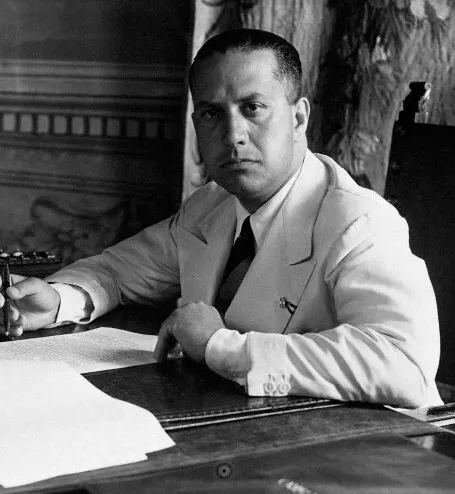
Galeazzo Ciano was Italy’s foreign minister from 1936 to 1943. He was Benito Mussolini’s son-in-law and, in his early thirties, one of the youngest men holding such an office in Europe at the moment war began. From his desk at the Palazzo Chigi in Rome he watched Italy slide from the security of a major European power into a binding alliance with Nazi Germany, and from there into a war that would destroy fascism, the regime, and Ciano himself.
He kept a diary. Almost daily, from August 1937 until his arrest in early 1943, he wrote down what he saw inside the inner circle of Fascist Italy and inside the Axis high command: meetings with Mussolini, dinners with Hitler, conversations with Joachim von Ribbentrop, the slow accumulation of evidence that the war was lost. He wrote with the bluntness of a man who suspected his record might one day be the only one that mattered.
What the diaries cover
The diaries trace the major hinges of Italian wartime policy: the formation of the Axis, the Pact of Steel of May 1939, the lead-up to Italy’s entry into the war in June 1940, the campaigns in the Balkans and North Africa, the deepening dependence on German military and economic power, and the Grand Council vote of 24 July 1943 that removed Mussolini from power and set Ciano’s own death in motion.
What makes them irreplaceable is not the diplomatic record — that survives in the archives of half a dozen capitals. It is the texture. Ciano was an eyewitness to Hitler’s monologues and a target of Ribbentrop’s evasions. He saw Mussolini’s judgment fail in real time and recorded the failure without softening it. He set down what was said in private rooms after the formal meetings ended.
Two stories worth knowing
The diaries should not have survived. Ciano was arrested by his own government in October 1943 and executed on 11 January 1944 in Verona. His captors, Italian and German, wanted the manuscripts destroyed. They did not get them. The story of how the notebooks reached the Allies — smuggled across the Swiss border by Ciano’s wife, Edda Mussolini, hidden under her dress — is one of the more remarkable preservation stories of the war. Read it here.
The diaries also contain individual entries that have shaped the historiography of the war’s origins. Among the most cited is Ciano’s account of two days in August 1939, when, summoned to Salzburg expecting routine consultations with his German allies, he learned almost by accident that Germany was about to invade Poland. Read it here.