How the Diaries Survived
The diaries should not exist. By the autumn of 1943 the Gestapo and the Italian Social Republic both wanted them destroyed; Hitler had been told they contained material that would humiliate Germany at the close of the war, and Mussolini, recently rescued from Allied custody and now ruling a German puppet state in northern Italy, had every reason to want his son-in-law’s record buried with him. That the manuscripts reached the Allies at all is the work of a small group of people, most of them women, working against both regimes.
Ciano in custody
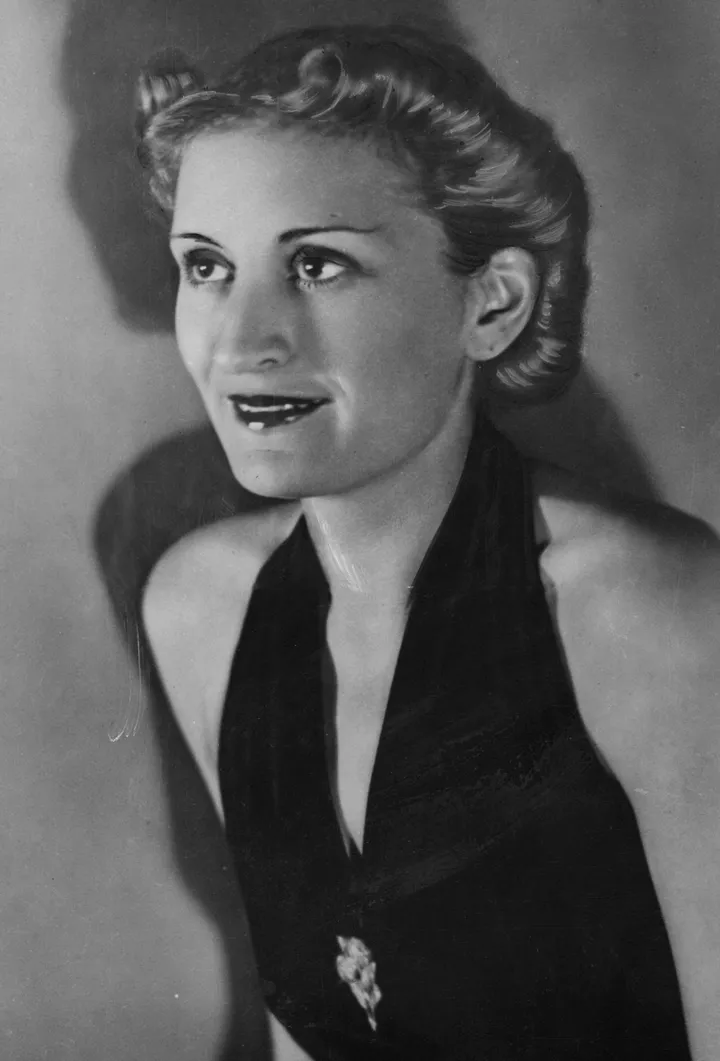
Galeazzo Ciano had been one of the senior Fascists who voted to remove Mussolini at the meeting of the Grand Council on 24 July 1943, an act the Germans regarded as treason. After Mussolini’s restoration that September, Ciano was arrested and held in Verona pending trial. His wife, Edda — Mussolini’s eldest daughter — moved to a clinic in Ramiola, near Medesano in Emilia-Romagna, while she negotiated for his life and tried to keep his papers out of the hands of either side.
She had every reason to think both governments wanted the diaries. They contained, among much else, Ciano’s contemporaneous record of meetings in which Hitler and Ribbentrop had given Mussolini one set of assurances and acted on another. They contained an interior history of the Axis that no surviving party wanted on the record.
Edda’s escape
On 9 January 1944, with German guards stationed outside the Ramiola clinic, Edda left through the cellar. She was disguised as a pregnant peasant woman; the diaries — five notebooks covering 1939 to 1943, plus the earlier 1937–38 volume — were sewn into her clothing by a friend of the family, an Italian air force lieutenant named Emilio Pucci, not yet famous as the postwar designer he would become.
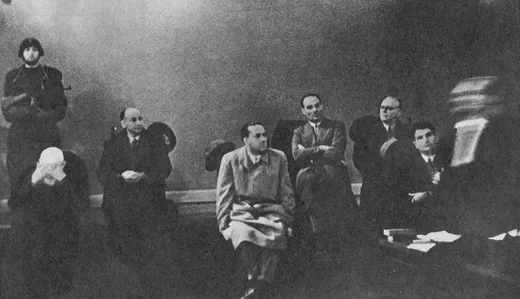
Pucci drove Edda to the Swiss border. She crossed on foot. He turned back toward Verona to deliver letters from her to a contact in the German legation, and was arrested by the Gestapo that evening. He was tortured for the next several days, on the assumption he knew where Edda had gone. He told them nothing. Two days after Edda crossed, on 11 January 1944, Galeazzo Ciano was executed by firing squad at Verona, tied to a chair facing backwards.
The convent at Neggio
Edda was held in protective custody at a Swiss convent in Neggio, in the Italian-speaking canton of Ticino. The Swiss authorities, anxious not to be drawn into the politics of the late Italian war, kept her location confidential. She was not without resources — the diaries were in a leather suitcase under her bed — but she was alone, recently widowed, and pursued by both the Germans and the Allies.
She was found, eventually, by a Chicago Daily News correspondent named Paul Ghali, whose reporting on her circumstances reached Allen Dulles, the head of the wartime intelligence station of the Office of Strategic Services in Bern. Dulles, who had already heard of the diaries through other channels, judged Edda — by his own subsequent admission — “a difficult customer,” and refused to meet her until he was confident the manuscripts could actually be transferred.
To the Allies
The two met on 7 January 1945, in the small Swiss town of Monthey, in the Valais. The negotiation that followed took several months. The diaries reached the OSS Bern station in stages; Dulles held the complete papers in hand by 27 May 1945. They were, in the words of his own assessment, the most important single political document concerning recent Italian affairs in existence.
A photographic copy was flown to Washington. Sections were used by the prosecution at the Nuremberg trials, where they served as evidence against Ribbentrop, who was convicted and hanged in 1946. The same year, the first English-language edition of the diaries was published, with an introduction by Sumner Welles, the former Under Secretary of State.
What Edda Mussolini had carried out of Italy in her dress that January night had become, within eighteen months, one of the foundational primary sources for the history of the war.